
Service Details
GLAUCOMA SERVICE
What Causes Glaucoma?
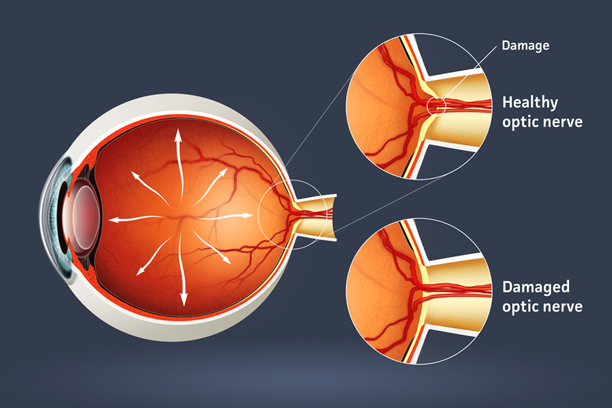
Glaucoma develops when damage occurs to the optic nerve, most commonly due to increased pressure inside the eye. The main causes and risk factors include:
-
Increased Intraocular Pressure (IOP): Elevated eye pressure damages the optic nerve over time.
-
Poor Drainage of Aqueous Humor: When the eye’s natural fluid does not drain properly, pressure builds up.
-
Genetic Factors: A family history of glaucoma significantly increases risk.
-
Age: Risk increases after the age of 40 and rises further with advancing age.
-
Medical Conditions: Diabetes, high blood pressure, and heart disease can contribute.
-
Eye Injuries: Trauma to the eye can disrupt fluid drainage.
-
Prolonged Use of Corticosteroids: Long-term steroid use may raise eye pressure.
-
Thin Corneas: Thinner-than-normal corneas are linked to higher glaucoma risk.
Types of Glaucoma
-
Open-Angle Glaucoma: The most common type; develops slowly with few early symptoms.
-
Angle-Closure Glaucoma: Sudden blockage of fluid drainage causing rapid pressure rise; a medical emergency.
-
Normal-Tension Glaucoma: Optic nerve damage occurs despite normal eye pressure.
-
Congenital Glaucoma: A rare form present at birth due to abnormal eye development.
-
Secondary Glaucoma: Caused by injury, inflammation, tumors, or medications.
Glaucoma vs. Cataract: Understanding the Difference
| Feature | Glaucoma | Cataract |
|---|---|---|
| Main Problem | Optic nerve damage | Clouding of eye lens |
| Cause | Usually high eye pressure | Aging, diabetes, injury |
| Vision Loss | Permanent if untreated | Reversible with surgery |
| Symptoms | Often silent initially | Blurred or cloudy vision |
| Treatment | Drops, laser, surgery | Cataract surgery |
In simple terms: glaucoma damages the nerve that carries vision to the brain, while cataract clouds the lens that focuses light.